Particulate Matter Sensor SDS011
With this sensor SDS011, it is possible to determine the particulate matter concentration in the air. The sensor outputs two values: the concentration of PM2.5 (particles < 2.5 µm) and PM10 (particles < 10 µm). This sensor is equipped with a small fan to draw in air. Inside, there is a laser that, together with a photodiode, measures the number of particles. The results of the measurements are given in µg/m³ (micrograms per cubic meter).
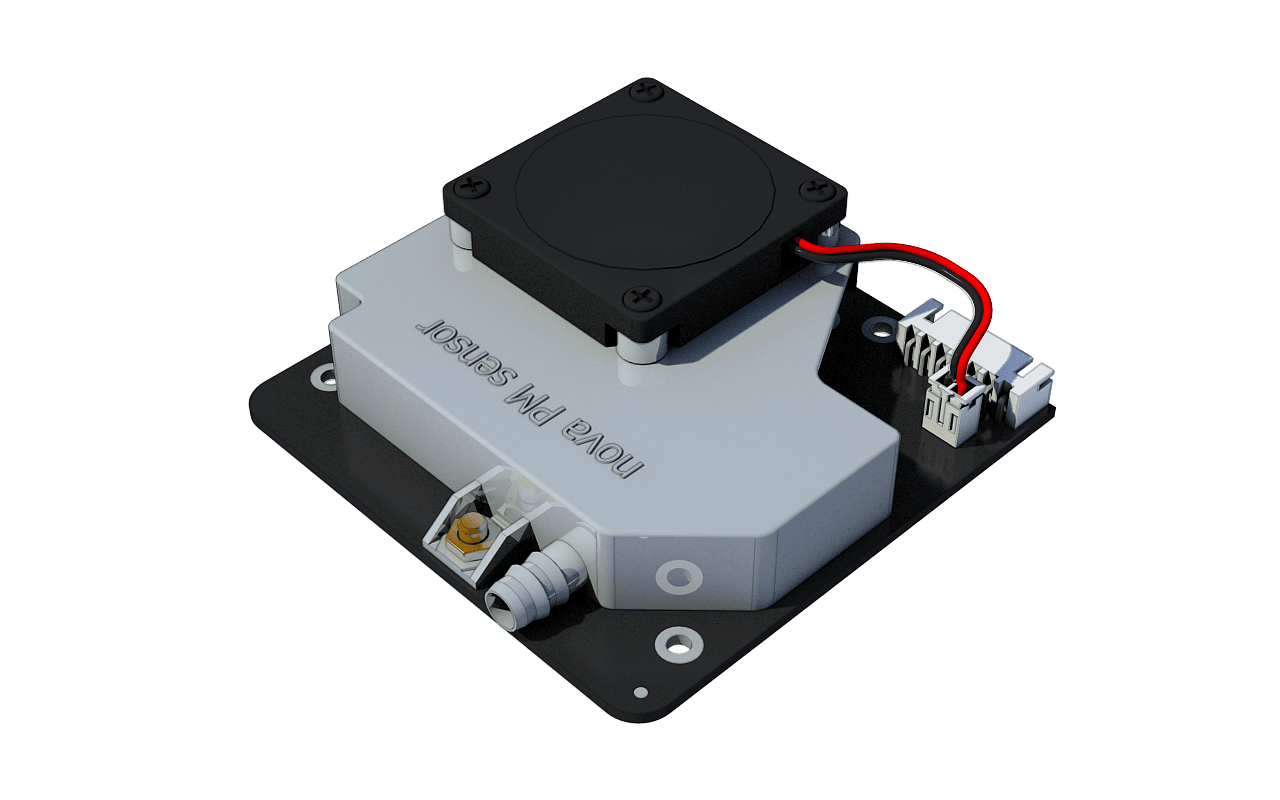
Particulate Matter Sensor SDS011
Technical Information
- Plug-in-and-go senseBox compatible
- Fast response time of less than 10 seconds
- High resolution up to 0.3µg/m3
- Multiple scientific testing of data accuracy
Connection
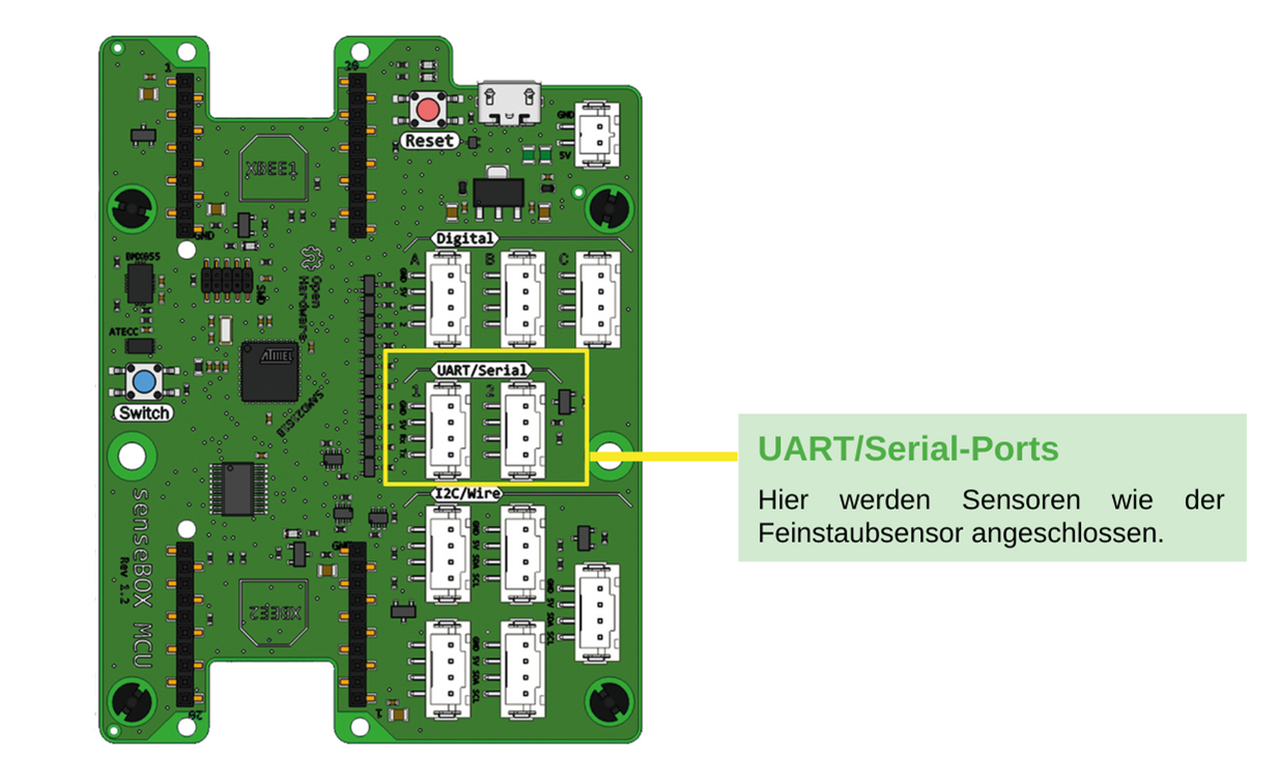
Die Komponente wird am UART Port angeschlossen.
Programmierung (Arduino)
Software Library
To program the sensor in Arduino, you need to install the software library sds-dust-sensors-arduino-library.
Code
In the following code, the values for PM25 and PM10 are output to the serial monitor.
The sensor requires a warm-up time of 30 seconds before it outputs measurements.
#include <SPI.h>
#include <Wire.h>

SDS011 my_sds(Serial1) // Serial1 specifies the serial port to which the sensor is connected
float p10, p25;

void setup(){
    // Initialize the standard serial port
    Serial.begin(9600);
    while(!Serial);
    // Initialize the serial port to which our sensor is connected
    Serial1.begin(9600);
    delay(5000);
}

void loop(){
    // Assign the measured particulate matter values to variables
    p10 = my_sds.getPm10();
    p25 = my_sds.getPm25();
    // Print values to the console
    Serial.println("P2.5: " + String(p25));
    Serial.println("P10:  " + String(p10));
    delay(1000);
}
Programming (Blockly)
In Blockly, the sensor can be read using the following block:

Select the port to which you have connected the sensor and the measurement value from the dropdown menu.
- PM2.5: Particulate matter fraction below 2.5 µg/m^3
- PM10: Particulate matter fraction below 10 µg/m^3